The Quiet Perfection of Japanese Tofu
Most people think they know tofu. They don't — not until they've had it in Japan.
Most people think they know tofu. They don't — not until they've had it in Japan.
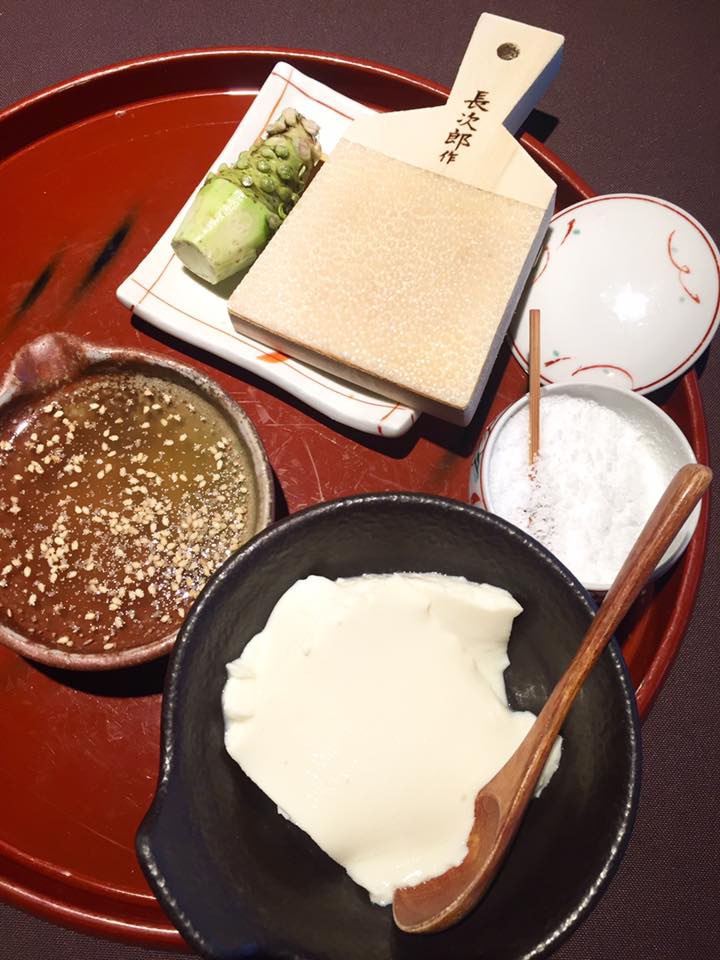
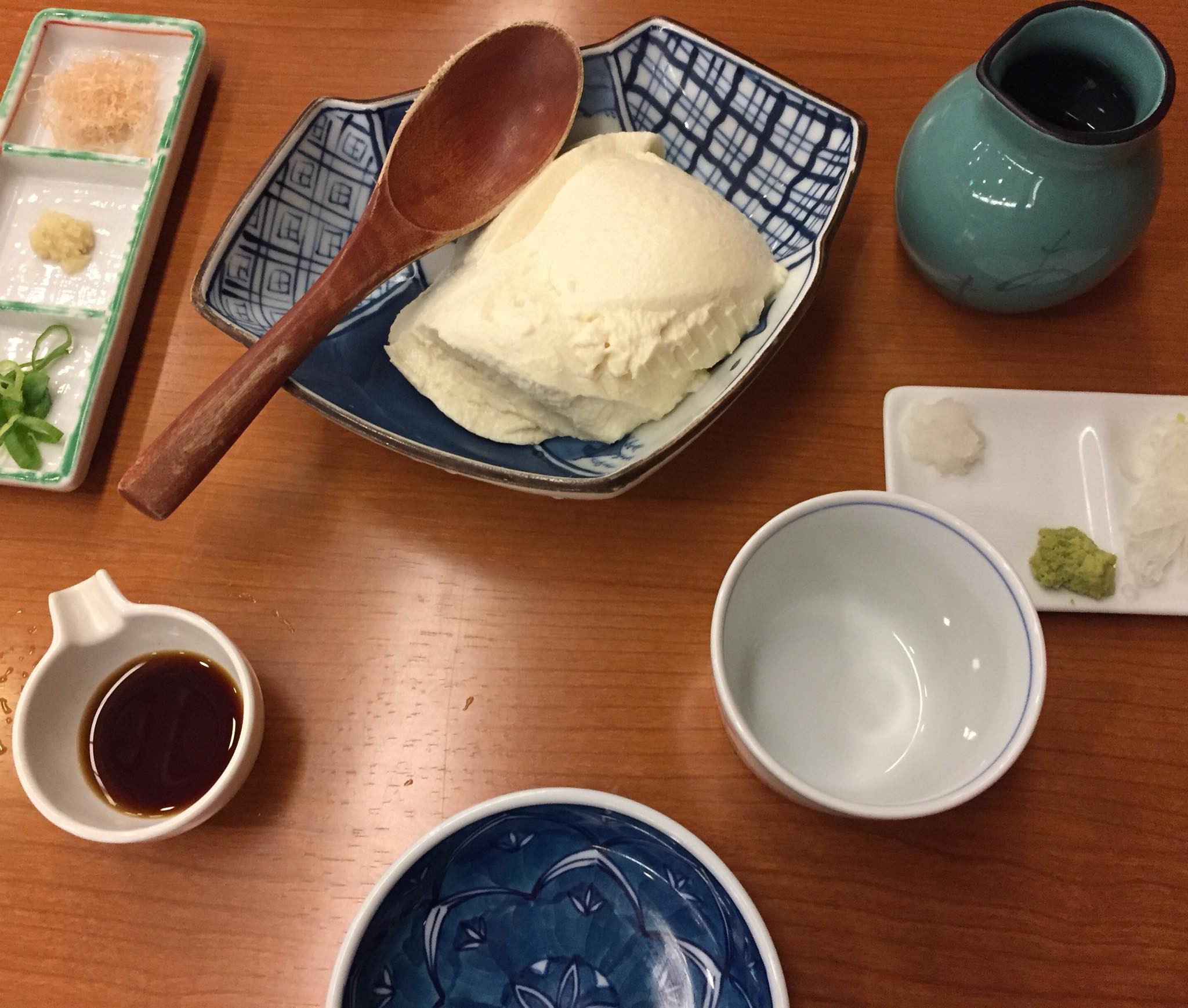
What arrives at a traditional tofu restaurant is something entirely removed from the firm, flavourless blocks you might know from elsewhere. Japanese tofu — made with care, from good soybeans, set fresh that morning — is soft, almost custardy, with a delicate sweetness that needs very little to accompany it. A wooden spoon. A small jug of dashi soy. A pinch of freshly grated ginger, a curl of spring onion, a little bonito. That's all.
The experience is deliberately unhurried. The tofu arrives in a beautiful ceramic dish, still warm, and the ritual of seasoning it yourself — deciding how much soy, whether to add the wasabi, how to balance the flavours — is part of the meal. There are no distractions. The ceramics are chosen with care, the tray lacquered and considered. Even the wooden spoon feels right.
Kyoto is the spiritual home of tofu cuisine, where restaurants have been serving it in this quiet, considered way for centuries. Yudofu — tofu gently simmered in kombu broth and eaten with dipping sauces — is one of the city's most traditional dishes, and eating it in an old machiya townhouse with a garden view is one of those meals that recalibrates what you think food can be.
It's a dish that asks you to slow down. In Japan, that's never a bad idea.
More from this trip