Fushimi Inari: Kyoto's Tunnel of Ten Thousand Gates
Thousands of vermillion torii gates winding up the forested slopes of Mount Inari — one of Japan's most iconic and enduring sights.
You've seen the photograph. Thousands of vermillion torii gates stretching into the forest, one after another, forming an endless tunnel of red and shadow up the side of a mountain. It's one of the most reproduced images in Japan, and arriving at Fushimi Inari for the first time, you half expect it to be a disappointment.
It isn't.
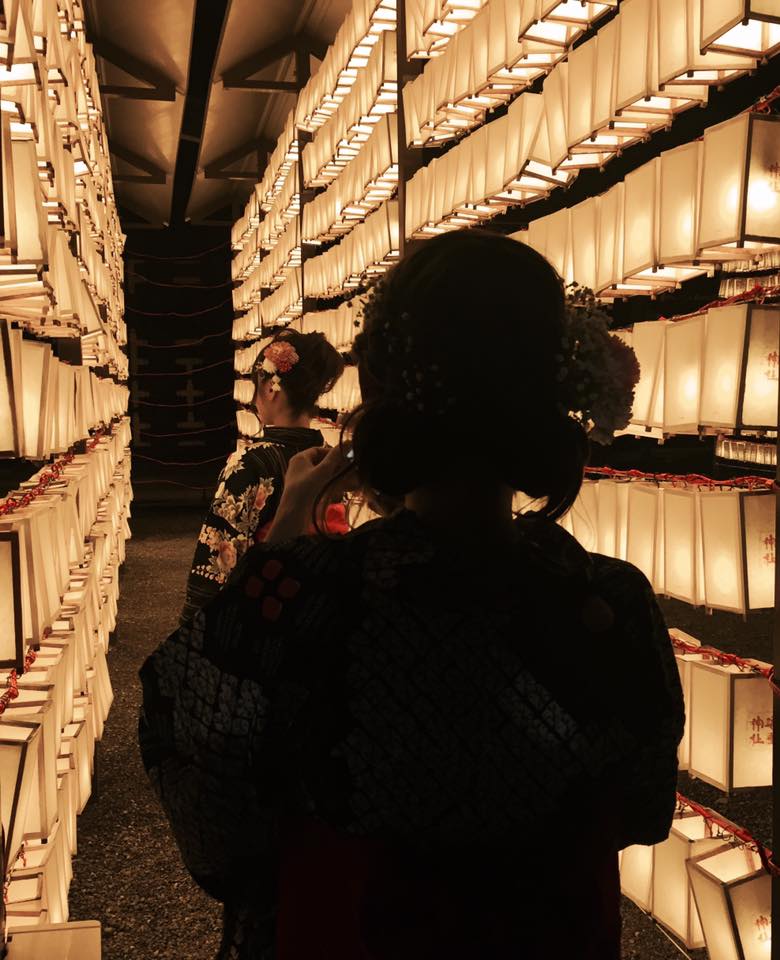
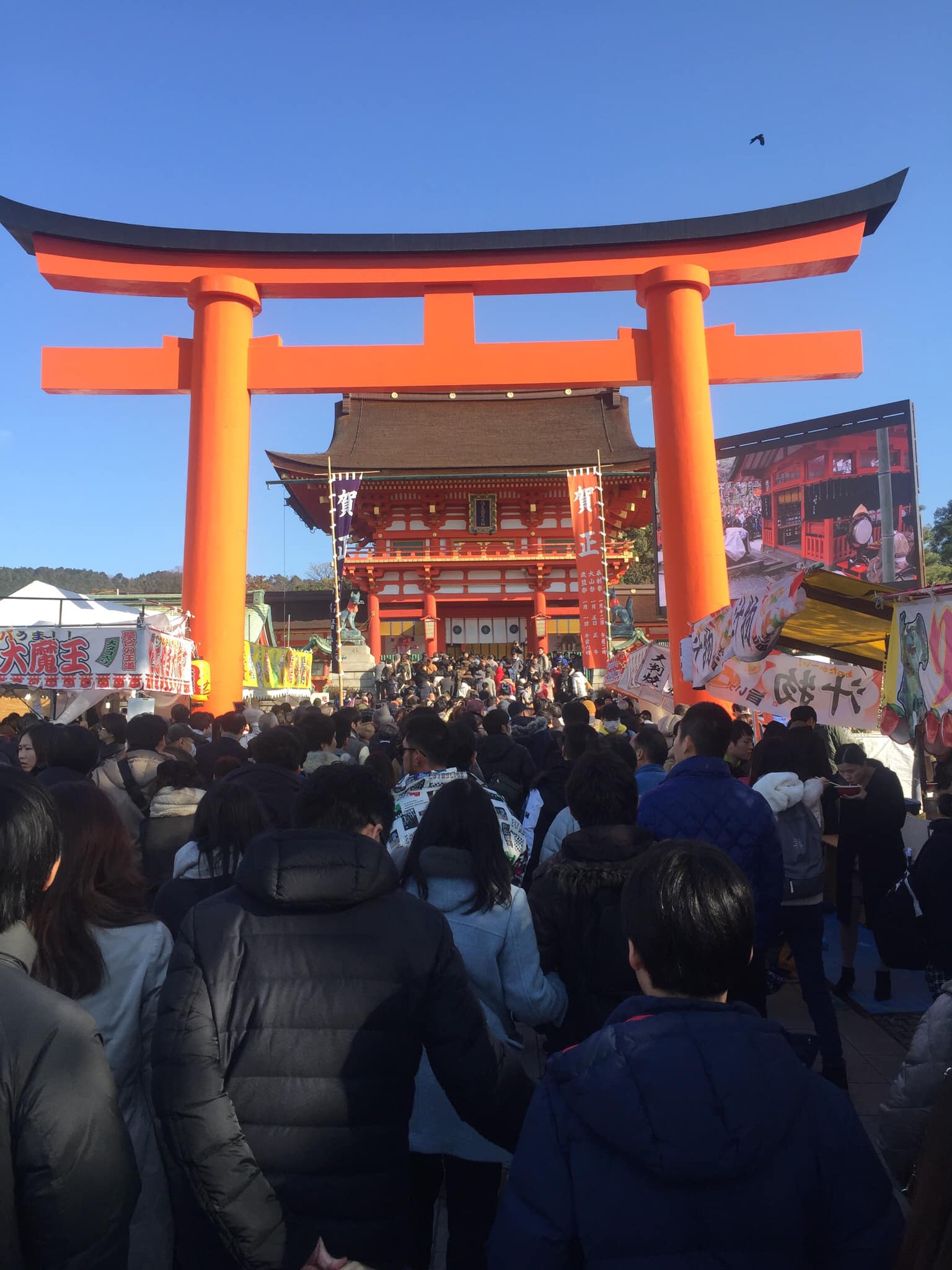
I visited on the first day of the year — which, I quickly discovered, is either the best or worst timing depending on your tolerance for crowds. In Japan, the first shrine visit of the New Year is called hatsumode, and Fushimi Inari is one of the most popular destinations in the country for it. Thousands of people, many in traditional kimono, filled the paths; incense smoke rose through the torii gates, the atmosphere somewhere between a religious ceremony and a festival. It was overwhelming and completely wonderful. There is something about being carried along by that many people all marking the same moment that stays with you.
Fushimi Inari Taisha, located at the base of Mount Inari in southern Kyoto, is one of Japan's most important Shinto shrines — the head shrine of Inari, the deity of rice, agriculture, and prosperity. The roughly 10,000 torii gates that line the hiking trails up the mountain were donated by businesses and individuals over the centuries, each one bearing the name and date of its donor in black ink. The tradition continues today; new gates are still being added.
The main approach — through the towering gates at the base, past the ornate shrine buildings with their deep red lacquer and elaborate carvings — is spectacular even at its most crowded. But the mountain is where Fushimi Inari reveals itself fully. The trail winds for about four kilometres to the summit of Mount Inari at 233 metres, passing smaller sub-shrines, stone fox statues draped with red bibs, and quieter stretches of gate where the crowds thin and the forest takes over.
Go early if you can — the gates at dawn, with low mist in the cedar trees and almost no one else there, are something else entirely. Or go in the evening, when the lanterns are lit and the lower paths glow with a warmth that the midday crowds never quite allow. The full hike to the summit takes around two to three hours return. Most visitors turn back at the first or second viewing platform, which means the upper trails are noticeably quieter — and the views over Kyoto from the top make the climb worthwhile.
Fushimi Inari is free to enter and open 24 hours a day. From Kyoto Station, it's a five-minute ride on the JR Nara Line to Inari Station — the shrine is directly across the road.